Simple Ways Cosmetic Dentistry Bakersfield CA Improves Smiles

A better smile rarely comes from one dramatic change. More often, it comes from a series of careful improvements that make teeth look cleaner, more balanced, and more natural in the context of a person’s face. That is one reason cosmetic dentistry continues to appeal to so many adults in Bakersfield. People are not always chasing a movie-star smile. Many simply want to fix a chipped front tooth, brighten years of staining, close a small gap, or replace older dental work that no longer matches.
When patients ask what cosmetic dentistry really does, the answer is straightforward. It improves the appearance of teeth and gums, but when it is done well, those visual changes often support comfort, function, and confidence too. A smile that looks even and healthy tends to be easier to maintain. A broken edge repaired early may prevent deeper damage. Teeth that are aligned more properly may wear more evenly over time. The cosmetic side and the practical side overlap far more than most people expect.
In a place like Bakersfield, where people work in every kind of setting from offices and schools to agriculture, healthcare, and local business, appearance matters in different ways for different reasons. For some, it is about professional confidence. For others, it is about family photos, weddings, interviews, or simply feeling less self-conscious in everyday conversation. Cosmetic Dentistry Bakersfield CA is not one treatment or one look. It is a collection of options that can be tailored to age, budget, oral health, and personal style.
Small changes often make the biggest visual difference
One of the most interesting parts of cosmetic dentistry is how modest work can transform a smile. Patients sometimes assume they need extensive treatment when what they actually need is restraint and precision. A slight reshaping of uneven edges, a touch of bonding on a chipped tooth, or whitening that lifts shade without making teeth look opaque can shift the whole expression of a face.
Dentists who focus on cosmetic results usually look beyond the teeth in isolation. They study lip line, gum display, face shape, skin tone, and the way a person talks and smiles naturally. A front tooth that is technically perfect on a model may look wrong on a real person if it is too long, too bright, or too squared off. This is where judgment matters. The best cosmetic work tends to be the kind that friends notice without being able to identify why. They say you look refreshed or polished, not that your teeth look “done.”
A common example is a patient with one discolored front tooth from an old injury. That person may hide their smile for years, assuming the fix will be complicated. In many cases, a veneer, bonding, or internal whitening approach can improve the color mismatch significantly. The entire smile appears healthier even though the treatment targeted a single tooth.
Whitening remains the most accessible improvement
If there is one cosmetic service that consistently delivers a visible return for relatively modest cost, it is whitening. Teeth naturally darken over time. Coffee, tea, red wine, tobacco, and certain medications can deepen stains, while enamel wear makes yellow dentin more visible. Professional whitening addresses many of these issues more effectively and more safely than random over-the-counter kits.
In-office whitening usually works fastest. Custom take-home trays often provide Cosmetic Dentistry Bakersfield CA more gradual control. Which method suits a patient depends on sensitivity history, existing restorations, and how dramatic a result they want. A realistic dentist will also explain the limits. Whitening does not change the color of crowns, fillings, or veneers. If older dental work sits in visible areas, brightening natural teeth may make those restorations stand out more.
That trade-off comes up often. Someone whitens successfully, then realizes a ten-year-old front filling looks darker than before. It is not a failed treatment. It simply means cosmetic planning should happen as a sequence, not as isolated purchases. Whitening first, then replacing visible restorations to match the new shade, often produces the most seamless result.
Bakersfield patients also deal with practical lifestyle factors. Strong sun, outdoor work, dehydration, and frequent coffee consumption can all affect how teeth look day to day. Whitening helps, but maintenance habits matter just as much. A person who drinks dark coffee all morning and never uses a straw for iced drinks may see fade-back sooner than someone with lighter staining habits. This is another reason professional guidance is valuable. The treatment is only part of the outcome.
Bonding solves more problems than people realize
Dental bonding does not always get the attention veneers do, but it is one of the most useful conservative cosmetic tools in dentistry. Using tooth-colored composite resin, a dentist can repair chips, soften sharp edges, close small gaps, mask minor discoloration, and improve the shape of teeth that look too short or narrow. In experienced hands, bonding can be remarkably lifelike.
Its appeal is easy to understand. Bonding usually preserves more natural tooth structure than crowns and often more than veneers. It can often be completed in one visit. It is generally more budget-friendly than ceramic work. For younger adults, or for patients who want visible improvement without committing to more extensive treatment, it can be a smart starting point.
The trade-off is longevity and stain resistance. Composite materials are strong, but they are not as durable or color-stable as porcelain. A patient who bites pens, chews ice, grinds heavily, or drinks a lot of coffee may see wear or staining sooner. Bonding can still be the right choice, but expectations should be honest. It may need periodic polishing, repair, or replacement over the years.
A good dentist will also know when not to use bonding. If a tooth has a large old filling, significant structural weakness, or a bite pattern that places too much stress on the repaired area, a veneer or crown may hold up better. Cosmetic success is not about choosing the prettiest option on paper. It is about choosing the one most likely to look good and stay that way.
Veneers can create balance, not just brightness
Porcelain veneers carry a certain reputation because they are associated with dramatic smile makeovers. In reality, they can be subtle, especially when used selectively. Veneers are thin ceramic coverings bonded to the front surfaces of teeth. They are often chosen to improve color, shape, length, symmetry, and mild alignment concerns.
The strongest veneer cases are not always the flashiest. A patient with naturally small lateral incisors, worn front edges, and uneven coloration can gain a more harmonious smile without looking artificial. Ceramic reflects light in a way that can mimic natural enamel beautifully when shade and contour are chosen with care. The key word is care. Veneers fail aesthetically when everything becomes uniformly white, flat, and oversized.
There is also a planning discipline that deserves more attention. Before veneers, patients should understand whether they clench, grind, or have gum inflammation. Cosmetic work placed on an unstable foundation usually disappoints later. If gums are swollen or recession is active, margins may become visible. If nighttime grinding is severe, porcelain may chip. Many dentists recommend a protective night guard after veneer treatment, not because something has gone wrong, but because prevention matters.
Some patients in Bakersfield ask whether veneers are worth it compared with repeated bonding repairs. Sometimes the answer is yes. Over five to ten years, repeated composite maintenance can add up, especially in visible front teeth. In other situations, bonding remains the more sensible choice because the teeth are young, healthy, or only need minor correction. There is no universal rule. Good cosmetic dentistry depends on reading the case in front of you.
Straight teeth can change a smile without changing personality
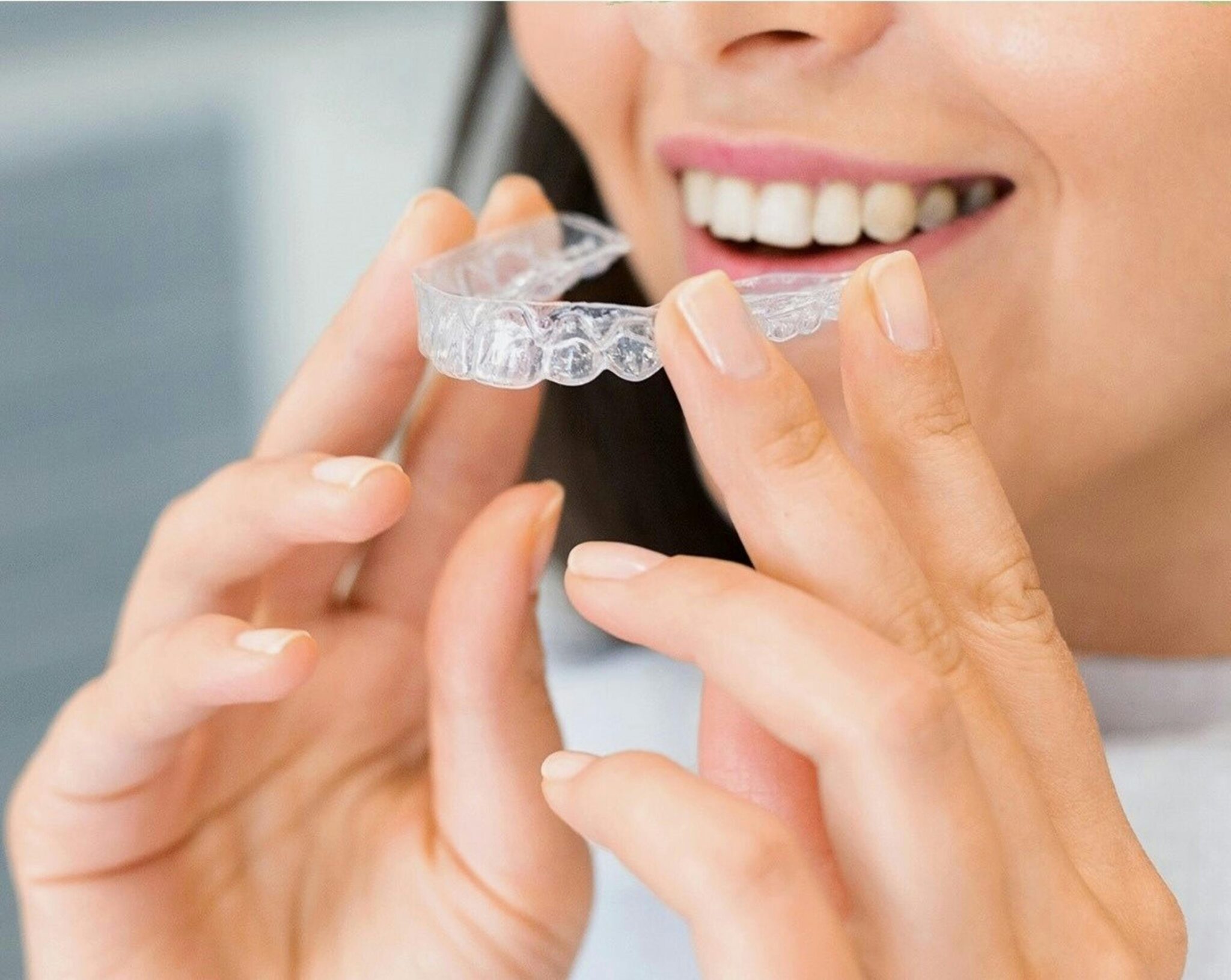
Cosmetic improvement is not always about color or surface texture. Alignment plays a major role in how a smile reads. Crowding, spacing, rotation, and uneven tooth heights all affect visual balance. Clear aligners and other orthodontic options have made many adults more willing to address these concerns because treatment can fit into work and social life with less self-consciousness.
When adults straighten their teeth, they often talk about the emotional effect first. They stop covering their mouth when laughing. They feel more at ease during presentations or client meetings. But the practical value should not be overlooked. Straighter teeth can be easier to clean, less plaque-retentive, and in some cases less prone to abnormal wear caused by misalignment.
That said, moving teeth for cosmetic reasons requires restraint as well. Not every small gap needs to be closed completely. Not every smile needs a textbook arch form. Character matters. A tiny bit of individuality can make a smile look real and attractive. Overcorrection can drain that personality. Dentists and orthodontic providers who understand cosmetic outcomes know when to improve and when to leave enough natural variation alone.
One patient scenario comes up often: an adult who had braces as a teenager, stopped wearing retainers, and now has mild lower crowding or one front tooth that drifted. For that person, short-term aligner treatment may produce a high-impact cosmetic result without the complexity of full orthodontics. A small shift can make brushing easier and photos much more flattering.
Replacing old dental work can quietly refresh a smile
Many smiles look tired not because the teeth themselves are badly shaped, but because older restorations no longer blend. Dark metal margins, discolored fillings, bulky crowns, and mismatched repairs draw the eye. Patients may not always identify the problem, but they can sense that their smile looks patchy or dated.
Replacing visible old work with modern tooth-colored materials can improve the smile in a way that feels clean and natural. This is especially true for front teeth with large fillings that have stained at the edges, or crowns placed years ago when shade matching was less refined. Today’s ceramics and composites can produce better translucency and contour than older materials in many cases.
Still, replacing restorations purely for cosmetic reasons calls for judgment. If an older crown is functioning well, fits properly, and is only slightly off in shade, the benefits of replacing it should be weighed against the fact that any dental treatment involves intervention. There is an art to knowing when improvement is worth the trade. Ethical cosmetic dentistry is not aggressive salesmanship. It is selective problem-solving.
Gum shape matters more than most people think
Teeth do not exist in isolation. The gums frame the smile, and uneven or excessive gum display can distract from otherwise healthy teeth. Some people have a gummy smile because of lip movement, tooth eruption patterns, or naturally short-looking teeth. Others have irregular gum heights that make one front tooth look longer than its neighbor when the teeth are actually similar in size.
In the right case, minor gum contouring can make a dramatic difference. It can expose more of the natural tooth, create symmetry, and improve the proportions between width and length. The result is often not “bigger teeth” so much as a calmer, more balanced smile.
This area deserves a conservative hand. Taking too much tissue can create sensitivity or make teeth look unnaturally long. If gum asymmetry is tied to deeper periodontal issues, those health concerns should be addressed first. Cosmetic gains should never come at the expense of support structures. A beautiful smile that compromises long-term gum health is not a successful outcome.
Repairing worn teeth can restore youthfulness
Tooth wear is one of the most underestimated cosmetic issues in adults over 35. Years of grinding, acidic drinks, reflux, stress clenching, and simple time can shorten front teeth and flatten their edges. A smile that once looked lively begins to look older, even if the teeth are fairly white and straight. People sometimes cannot put their finger on the change. They just feel their smile looks “hard” or “small.”
Cosmetic dentistry can help by rebuilding lost edge length, improving contour, and restoring some of the translucency and texture younger enamel naturally shows. This can be done with bonding, veneers, or crowns, depending on the amount of damage. Even adding one or two millimeters to worn front teeth can make a person look more rested and expressive.
The caution here is functional balance. Teeth wear for reasons, and unless those reasons are addressed, cosmetic repairs may not last. If a patient grinds heavily during sleep, a night guard is often part of the treatment plan. If acid erosion is active due to dietary patterns or reflux, those causes need attention too. In my experience, the most durable cosmetic cases are the ones where the dentist solves both the appearance issue and the reason it developed.
What patients should look for before saying yes
Choosing a provider for Cosmetic Dentistry Bakersfield CA involves more than comparing prices. Cosmetic work sits at the intersection of science, craftsmanship, and communication. Patients need a dentist who listens closely enough to understand what bothers them, but also has the confidence to guide them away from unnecessary or unstable treatment.
A few signs usually point in the right direction:
- The dentist discusses your bite, gum health, and existing restorations before talking about ideal whiteness or perfect symmetry.
- Photos, mock-ups, or trial planning are used when the case is visible and significant.
- Limitations are explained clearly, including maintenance, sensitivity, and how long materials may realistically last.
- The proposed smile fits your face and age, rather than copying a trend.
- You never feel rushed into deciding on multiple elective procedures at once.
That last point matters. Patients often come in feeling vulnerable about appearance, and that can make them easy to oversell. Good cosmetic dentists know that trust is built by pacing treatment appropriately. Sometimes the best first step is not the final step. Whitening first, then reassessing shape. Aligners first, then minor bonding. Gum treatment first, then veneers. Sequence affects outcome.
The confidence piece is real, but it should not be oversold
There is a tendency in cosmetic marketing to imply that a better smile will fix every social or professional problem. Real life is not that simple. Cosmetic dentistry can improve self-image, but it does not change personality, erase anxiety, or guarantee life outcomes. What it often does, though, is remove a distraction.
That distinction matters. A patient who has spent ten years smiling with lips closed because of a chipped front tooth may not become a different person after repair. But they may stop thinking about that tooth twenty times a day. That kind of relief is meaningful. It frees attention and energy. In photos, in conversation, in job interviews, and in ordinary daily interactions, they show up a little more fully.
I have seen people react more strongly to small cosmetic repairs than to much larger treatment elsewhere in the mouth. A broken back tooth may hurt more, but a visible front tooth affects identity. It affects how people feel they are seen. That is why thoughtful cosmetic dentistry can have such a disproportionate emotional effect relative to the size of the procedure.
Cost, maintenance, and longevity deserve honest discussion
Every cosmetic option has a different balance of price, upkeep, and lifespan. Whitening is relatively affordable but needs touch-ups. Bonding is conservative and efficient but may stain or chip over time. Veneers can look exceptional and resist staining well, but they require larger investment and careful planning. Clear aligners involve discipline, especially with wear time and retention.
Patients do best when these realities are presented plainly, without pressure. A lower-cost option is not automatically inferior if it suits the patient’s goals and timeline. Likewise, a higher-cost option is not wasteful if it provides better durability in a demanding bite. The question is not just “What looks best on day one?” It is “What fits this person’s habits, health, and expectations over the next five to ten years?”
Maintenance also matters more than many realize. Cosmetic work usually rewards people who keep regular cleanings, wear prescribed night guards, avoid destructive habits, and return early when a small issue appears. A tiny chip repaired quickly is simple. The same chip ignored for months under repeated stress can turn Cosmetic Dentistry Bakersfield CA into a larger fracture with more expensive consequences.
Why a natural result usually wins
The most successful cosmetic smiles are rarely the brightest or most uniform. They are the ones that look believable. Natural teeth have variation in translucency, line angles, surface texture, and shade. Even beautiful smiles are not sterile. They have life. Replicating that takes skill and restraint.
In Bakersfield, as anywhere else, patients come from different age groups, professions, and cultural preferences. A 28-year-old wanting subtle refinement may need a very different approach than a 62-year-old replacing worn dental work and restoring lost tooth length. Cosmetic dentistry should reflect that individuality. A one-style-fits-all smile is usually a sign that appearance was prioritized over harmony.
When the work is right, people notice the person before the dentistry. They see energy, health, and ease. They do not focus on the material used or the technique chosen. That is the quiet power of excellent cosmetic care. It improves what is there, respects function, and leaves the smile looking like it belongs to the face, not like it was imported from a catalog.
For anyone considering Cosmetic Dentistry Bakersfield CA, that is the real promise. Not perfection, and not reinvention. Just simple, carefully chosen improvements that make smiling feel easier, look healthier, and fit naturally into everyday life.
Toothworks of Bakersfield, Dentist and Orthodontist
Address: 1030 H St #1, Bakersfield, CA 93304
Phone number: +16613239421
FAQ About Cosmetic Dentistry Bakersfield CA
What is considered cosmetic dentistry?
Cosmetic dentistry includes any dental treatment focused primarily on improving the appearance of your teeth, gums, or bite rather than treating a disease or restoring basic function.
How much does cosmetic dentistry usually cost?
The cost of cosmetic dentistry typically ranges from a few hundred dollars for minor touch-ups to over $20,000 for a comprehensive smile makeover, depending entirely on the specific procedure, materials used, and how many teeth are treated. Because most cosmetic treatments are elective, they are usually paid out of pocket without insurance coverage.
Is there a difference between a regular dentist and a cosmetic dentist?
Yes, a regular dentist focuses on your overall oral health and preventing disease, while a cosmetic dentist focuses on improving the look of your smile.
Ends · CRISTIANJRRC247